
How to remove the Elys Cup ?
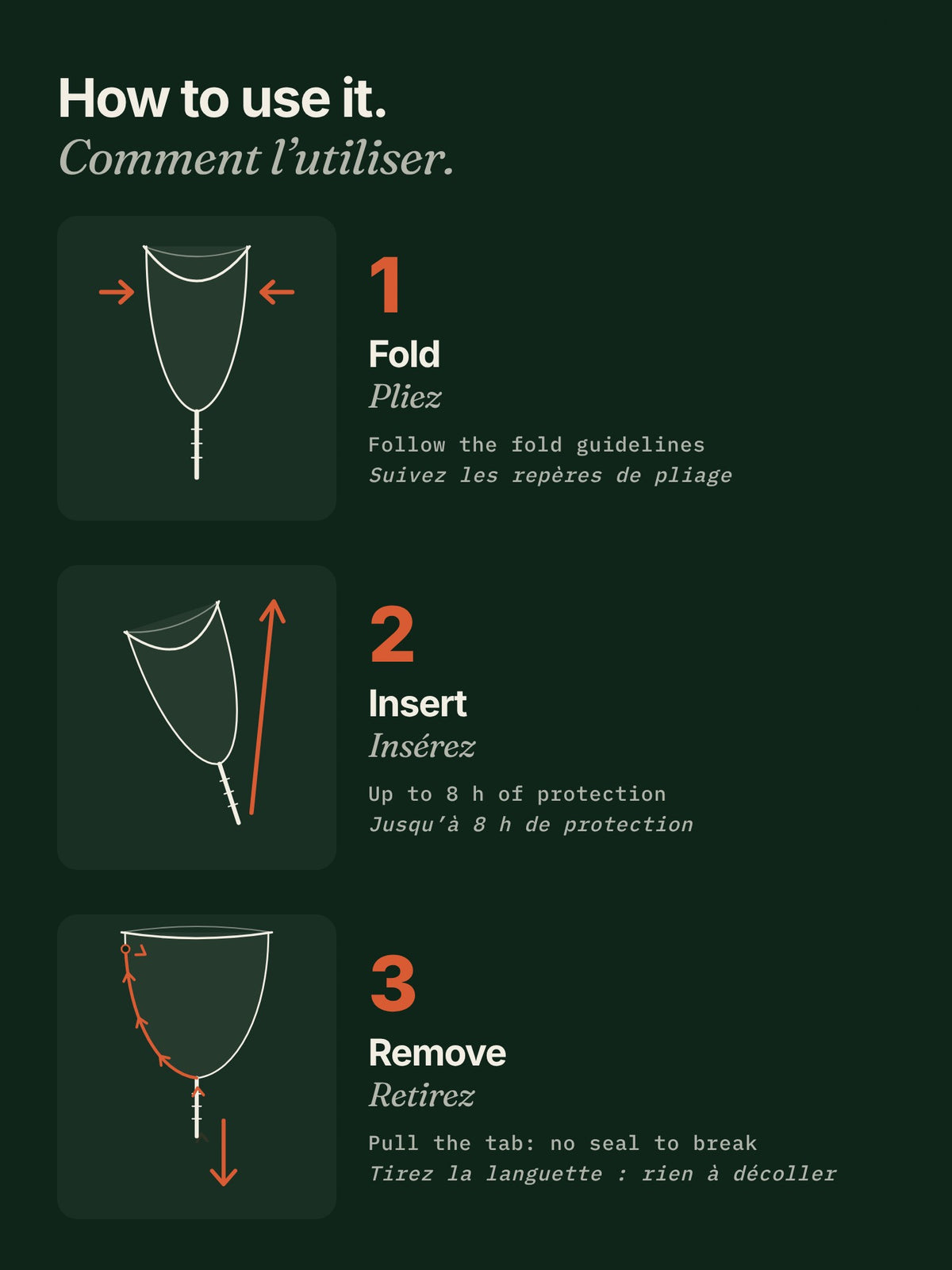
The short version: use the pull tab. That's it.

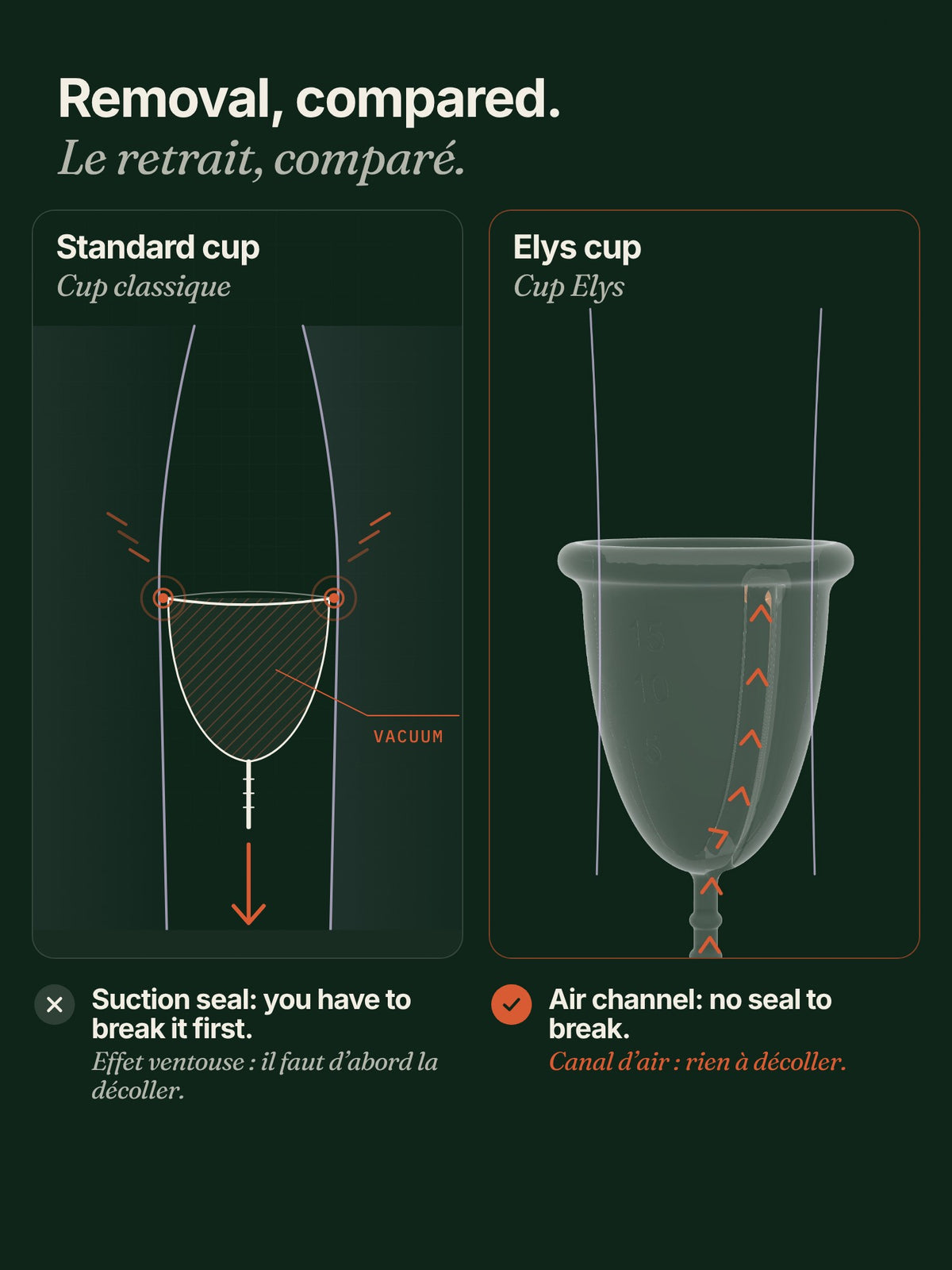
With our cup, the suction is never formed
At Elys, we think the problem isn't user technique — it's cup design. The Elys cup is engineered with a patented air channel that lets air flow into the cup even when the vaginal wall wraps around it. The result: a suction seal never forms in the first place. There's nothing to break, no trick to learn, no tugging — removal feels closer to removing a tampon. It's the part of cup use most people worry about, so it's the part we redesigned.
...but if you want to know the mechanics, or what applies to our competitors, read on below:
The vagina is a closed canal a few centimetres long, ending at the cervix. There is physically nowhere for a cup to go. What people call a “stuck” cup is almost always one of two things: the cup has moved a little higher than expected, or a suction seal is holding it in place. Both are manageable.
First: it cannot actually get lost
Conventional menstrual cups work by design with a vacuum seal: once inserted, the cup opens and its small ventilation holes get covered by the vaginal wall. When you pull the stem, the seal holds — and pulling harder only increases the suction. That's the uncomfortable tugging sensation many users describe, and the reason instructions tell you to break the seal with a finger before removing.
Why other cups get "stuck": the suction effect
- Breathe first. Stress tenses the pelvic floor muscles, which grip the cup harder. Sit on the toilet or squat, and take a few slow breaths.
- Bear down gently. Use your pelvic muscles as if pushing during a bowel movement. This moves the cup lower where you can reach it.
- Break the seal. Pinch the base of the cup (not the stem), or slide a finger alongside the rim to let air in. You'll feel the resistance release.
- Rock it out slowly. Ease the cup out at an angle, one side at a time, rather than pulling straight down.
- Take a break if needed. If it's not working, walk away for 30 minutes. A relaxed body makes removal much easier.
If you cannot remove a cup after repeated calm attempts over several hours, or you feel pain, contact a healthcare professional — it's a quick and routine intervention, and nothing to be embarrassed about.
How to remove a cup that won't come out
Suction is the reason many IUD users are cautious with cups: breaking the seal carelessly while removing a cup can, in rare cases, tug on the IUD strings. If you have an IUD, always break the seal fully before removing any cup, and talk to your healthcare provider before starting to use one — every body and IUD placement is different.
Can this happen with an IUD?



Elys Cup
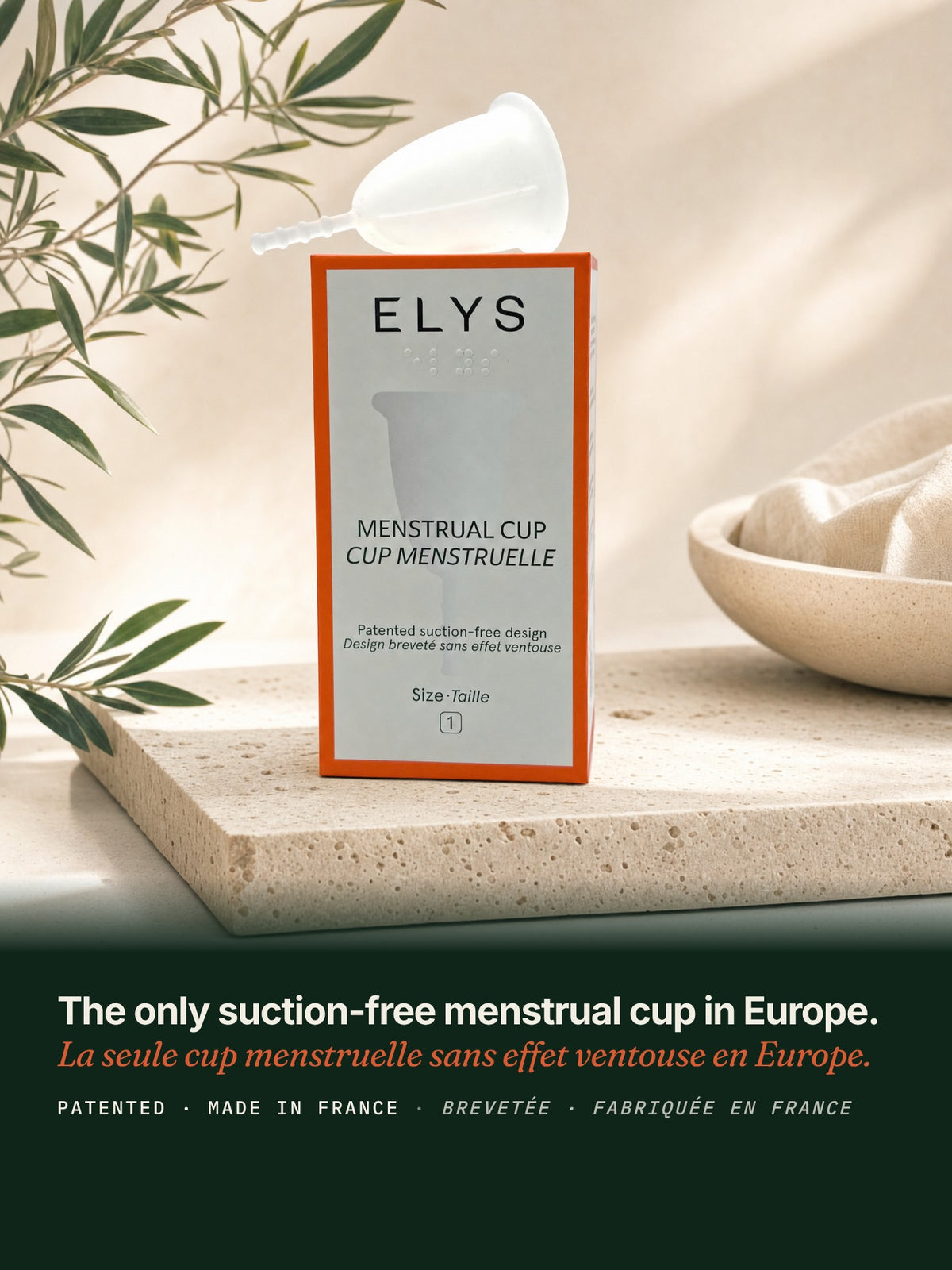
The only suction-free menstrual cup in Europe.
The Elys Cup features a patented suction-free design, engineered for easier, calmer removal — the part of cup use most people worry about.
Reliable protection and all-day confidence, with the simplicity of tampon-like removal.
- Up to 8 hours of protection
- Patented suction-free removal design
- Easy insertion with fold guidelines
- 100% medical-grade silicone — BPA, latex and phthalate free
- Designed in Belgium, made in France
Why "up to 8 hours"? Because that's what we tested.
8 out of 10 testers preferred Elys to any other menstrual protection (independent study, 100 women).
Find your size ▾ (tap to open)
Size 1 – Small · Ø 35.4 mm · 68 mm — first cup, teens, light to medium flow
Size 2 – Medium · Ø 39.5 mm · 70 mm — most users, medium flow
Size 3 – Large · Ø 42.6 mm · 70 mm — heavy flow, or after vaginal childbirth
Not sure? Every Elys cup has a cut-to-fit tab — with no suction to break, the tab is pure convenience. Trim it to your perfect length.
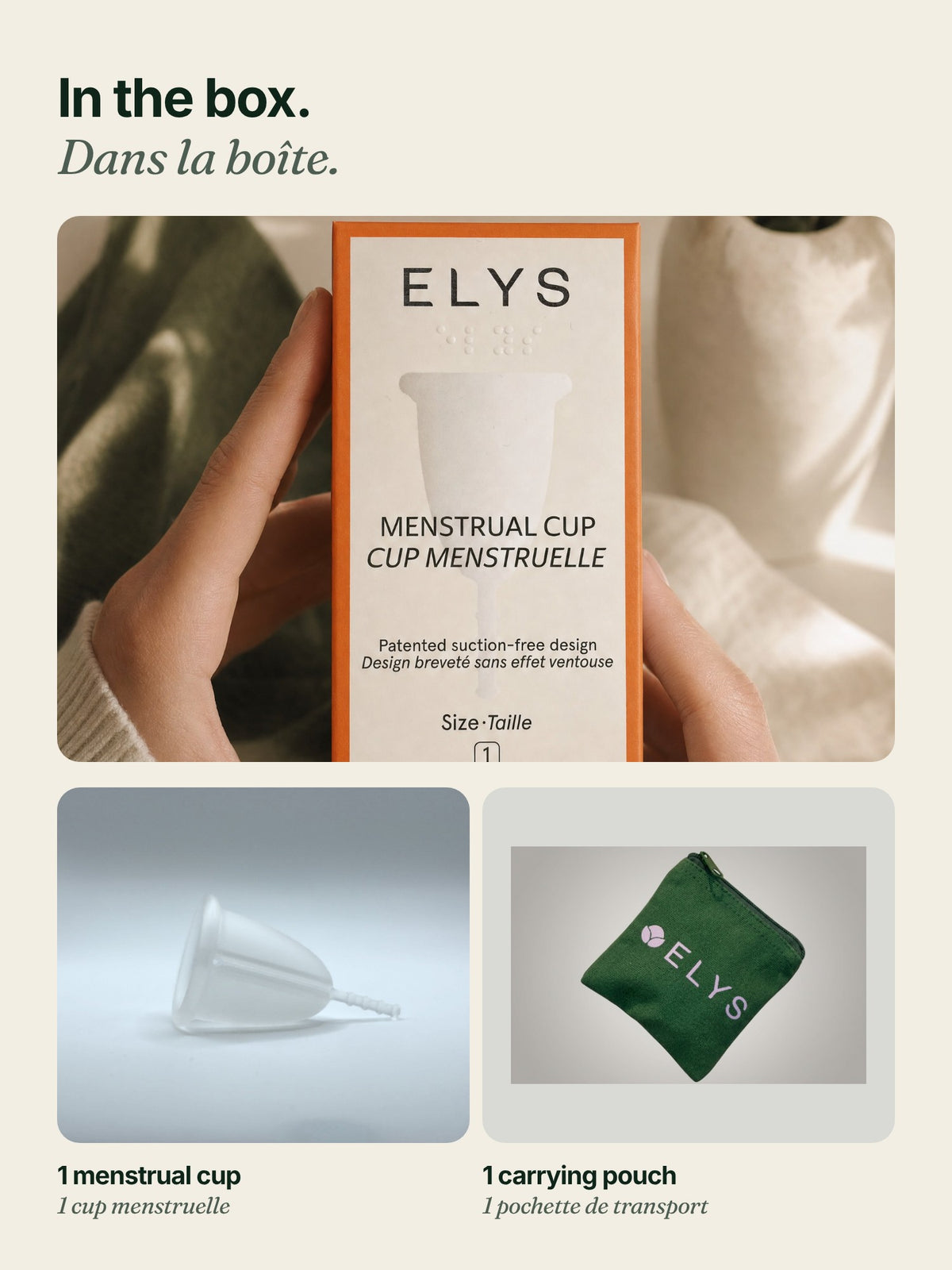
Package content:
1 menstrual cup
1 carrying pouch